Thursday, April 9, 2015

marking time

I'm finally watching the Aaron Swartz documentary.   Sitting next to N[athan], one of the four kiddos who started CSCL, with H[alley] who's back from Germany and D[ina] whose kid gave me his Easter candy to help ease the tax burden.  Last day of my first class teaching kids about mass incarceration, tax day, when we'll make it through yet again at all odds.   Today I am feeling good about the world.

I'd like to think that Aaron would like Parts and Crafts, and would hang out here on his vacation time, hacking camera stuff or running github workshops or teaching kids how to use IRC.  In the meantime, we keep on keepin' on, making tool libraries and running free schools and building up freedom schools, making education an open access project.  Insisting on existing, being licensed, occupying spaces, and making shit happen.   I didn't die two years ago, and I'm pleased about that,

It took me a long time to get here, and I'm so very pleased about the ride so far.   Here's to you, Aaron, for making the world a better place.

Sunday, May 5, 2013

sliding backwards

It all seemed like it was going so well.

This is the year that Parts and Crafts became real.   We hired two staff, sold out camp at 50 kids a week, and successfully ran the Center for Semiconducted Learning, a school alternative that has doubled in size in the past six months.   We became an LLC and signed our first commercial lease.   We moved out of the basement of the Clarendon Hill Presbyterian Church and into a storefront on Somerville Ave.

Great, right?   All that aside, what a fucking nightmare.

At the moment, we're on hold (again) from ISD, who, having inspected the building and given us the OK, has decided that maybe there *is no* use code for our type of building, and has indefinitely put our certificate of occupancy on hold.   It's all probably fine, of course, though possibly not.    And then we'll go another month without space, writing apologetic emails and slowly going broke.  

I'm not mad about it.

Instead, I'm sliding into days full of sleep, emails going unanswered, spending time that could be going toward projects reading suicide prevention blogs.   The deadline for Salt is coming up and will likely pass unimpeded.   CSCL will continue somewhere, but no plans can be made for the future.

Monday, January 14, 2013

Visiting my friend, who is in jail

First thing you do is take off all your stuff.   Jewelry, bandanna, coat, hoodie.    Empty your pockets, put all your shit in a tiny locker.    There are twelve or thirteen other people, mostly women, mostly Hispanic, one with two little kids -- everybody gets into a line to go through the metal detectors.  Throughout the process, I am reminded at every turn that I should have come earlier, that I just barely made it in, that I'm lucky to get into this round of visitors.

I'm visiting my friend D****, who is in jail for no good reason.   "Stupid shoplifting stuff" -- stuff you can pretty much still laugh about, even though the context is pretty grim.   Sitting on the other half of a plate-glass cell, it's hard not to think about Aaron Swartz, hacker extraordinaire, who I only knew second-hand through friends and housemates.    The internet is on fire this week after he hanged himself in his Brooklyn apartment, faced with 30+ years in prison for downloading academic papers from behind a paywall.   We talk about that a bit, but it's hard -- inside the room, the sound is completely fucked up, and you have to yell to hear each other.    There are no phones, just the tiny grate, no touching, just glass.   Like having a cup of coffee in a sensory deprivation chamber.  

D**** says there are a handful of people on the other side of the wall who are political organizers.   "Most of the rest of them are here because they killed someone."    He laughs, then puts his head in his hands.   "It's kind of the wrong place for me.   But there are some pretty famous people in here."    I tell him it could be worse.    Better to be in jail, after all, than to be dead.    I ask him what it looks like on the other side.    On my side, the hallways are reminescent of Terminator 2 --- with the exception of the views, each time the elevator door clicks open, spectacularly hazy views of the Boston skyline.    He describes an atrium, a little room with a bed and a window.   "It looks out on a wall," he says, grinning, "but you can see people as they come in and out."

The weirdest thing about my side of the glass is that there are no other people.    From entrance to exit, after filling out my initial intake form, I have no direct interaction with any of the jail staff.   The halls are completely empty --- when our time is up, nobody knocks.   The lights flicker on and off, and as I head back toward the elevator, our line forms up again -- slow, think ranks of slightly cheered people, heading back out into the world outside.   

Sunday, January 13, 2013

Knowledge is Power -- but only for the gifted under twenty

In his book "How Children Succeed," Paul Tough talks a lot about KIPP, which is successful and highly vaunted in educational reform circles.    When Josh was teaching at Roberto Clemente, it was all the TFA set talked about.    Friends talked lovingly of quiet lines of kids walking down the hallways, of silent classrooms, of perfectly lined paper, of a single-minded focus, all steering towards the ultimate goal of college admission. 

KIPP is the anti-free school --- a highly rigorous environment, aimed at college success, but also crucially designed to foster a strong sense of community   (to recreate the classroom as a safe space).    That's a good premise, but doesn't work if kids continue to need the highly structured environment in order to succeed.     Tough talks about how KIPP students struggle, once they get into college, and lack the full context and community driving them to keep up in a new and different context.

On the other side of the socioeconomic spectrum, the Thiel Fellowships!   "Intended for students under the age of 20, [Thiel Fellowships] offer them a total of $100,000 over two years as well as guidance and other resources to drop out of college and pursue other work, which could involve scientific research, creating a startup, or working on a social movement."    Selection is tight -- it's harder to get one of these fellowships than it is to get into Princeton.   

As excited as I am about motivating students to think critically about whether college is right for them, monetizing self-directed learning seems like, well, kind of an asshole thing to do.    As Will said to me the other day, "You don't need money to drop out of college -- you need money to go.   That's the whole fucking point."

Both programs make me incredibly angry -- KIPP, because it misses the point that middle-schoolers are themselves autonomous, thinking humans, and Thiel, because it uses venture capital as the benchmark for success.   The high-profile "success" marketed by both programs makes assumptions about kids, and how kids learn, that seem deeply troubling when thinking about diversity, access, and equal opportunity.      

What does an alternate world look like?    It takes that $100,000 and divides it between 10 kids, giving half to gifted dropouts, half to first-year college students --- with the explicit goal being to fund students who would otherwise be getting shitty service jobs to pay for their education.    It would involve making KIPP less about gifted teachers, more about creating environments that teachers want to teach in --- not holding their jobs hostage to outward-determined measures of success.    It would involve focusing on mental health, rather than academic success, and trying to create safe spaces in classrooms, where kids and grown-ups can work on being full humans, before they work on being "successful" ones.  


Letter to Paul Tough on "Why Children Succeed"


Hi Paul,

I read your book over the winter holiday and really enjoyed it.    It was incredibly refreshing to read a literature review that didn't focus primarily on Gates-funded proposals.  

As the owner / operator of a free school, I'm going to ask the obvious question -- why no mention of self-directed learning in your literature review?     A lot of the research you point to about stress in early learning made me think about how students  (and, hell, teachers and parents) experience stress every day in schools.    I work in a small alternative school, and one thing parents say over and over again is, "I just want my kid in a place where he/she can experience success."    

By and large, these are pretty well off kids, white children, or children of  professional immigrants who aren't lacking for educational resources or support --- they are kids who should be doing well in school, but instead, they're basket cases.    They're stressed out, they can't sit still, they freak out if you suggest that they sit down and work on math together.   Pitching it to kids and families, we deliberately introduce "school" as a community that is highly interested in learning, but where grownups don't give a shit about how they do by standard academic metrics ---where  they place, at what level they read, how they score on X, Y, or Z test.   The goal is to reduce stress, rather than maximize outcomes --- kids come to us because school is making them crazy.     We spend a lot of time talking to kids, having conversations, playing video games together, trying to work out what they're stressed out about, and create friendly alternatives to help them deal with it.    

The ideas is, if we can reduce the level of stress --- by making "school" a safe and friendly space -- then they can have space to be curious and interested in things again, and they can do it in their own time.       Free schooling has its problems -- it certainly results in a class / race stratification, serving overwhelming white and upper-middle-class   (exceptions abound, of course, but that's my own experience).    That said, I wonder if, embedded, in old-school free schooling doctrine  (John Holt et al), whether there are some insights here about how school itself -- and certainly, the policy context around high-stakes, well-funded reform initiatives -- itself creates the kind of stresses that make it impossible to succeed.    

If licking, comforting, hugging, is the strongest marker of success for infants, why wouldn't we also assume that stress -- maintaining school as a low-stress, friendly, safe learning environment -- is just as important for 16-year-olds?        If teachers are terrified of being fired, or are so tied by curriculum and higher administration that they cannot be themselves in the classroom, it's hard to imagine how you're going to have a learning space that feels safe enough for kids, in turn, to relax and be themselves.    If kids are regularly told that they're stupid, or tracked into classes where their assignments are irrelevant and meaningless -- and then told that they *have to be there* -- that grinding their teeth and working through it is the key to their success -- why not let them hang out and destress for a bit, try to lower the stakes?

Free schooling literature tends to focus on political autonomy, but the more pragmatic aspects -- above all, creating low-stress, friendly, collegial learning environments --- seems just as important here.   Linking your first chapter to your last one --- if licking is more important than Baby Einstein videos, why wouldn't we assume that playing video games and being able to curse in the classroom might also be just as instrumental to creating safe, friendly, cheerful environments for teenagers?     

That might sound utopian --- but if we're talking about stress as a central inhibitor to successful learning environments, it's worth thinking about creating work environments that grown-ups and kids actually want to be in, and look at how current policy goals are inhibiting those instances.  

Those are some of the initial thoughts I had, at least.   There was a lot of food for thought in your book, and I'm grateful to have had the chance to read such a comprehensive review of the literature.     Thanks for writing such an engaging and useful book!

All best,

Katie

Thursday, May 24, 2012

it's vacation time!


"I arise in the morning torn between a desire to improve (or save) the world and a desire to enjoy (or savor) the world. This makes it hard to plan the day." ~ E.B. White

Week 6 of mentally decamping from Occupy -- not going to GA, not responding to email, hiding out in the virtual presence of Facebook, heading 3000 miles west to Portland to drink coffee, hike about in the rain, go shopping, and hang out with friends and their babies.    Hippie-comfort!   Here's a video that seems appropriate to the times:


publishing old emails.

Back in January, we spent four weeks learning about rape culture at Occupy, after realizing that one of our die-hard  OB folks was a level-3 sex offender.   What followed was pretty predictable near-total breakdown of public discourse--- but it wound up being a useful opportunity to think about how to deal with real affinities in a big community space.    I just found this email -- I was exasperated and annoyed at the time, so didn't send it, but I think there's some useful stuff here.

Here it is!

****************************************************

[some introductory stuff here - relating to a proposal being blocked]

 In three months of doing outreach work at OB, it has become very, very clear to me that OB is a big group of people. When facilitation does a role call on a room of 200 people and asks who is here for the first time, *very few people raise their hands.* That's amazing, and it's a credit to how big this movement actually is. When I look around the room at community gatherings, I don't recognize most of those people -- but I am absolutely persuaded that they are as much a part of OB as I am, and that many of them are as involved as I am, and that our paths have simply never crossed.

 This level of dissonance - the way our sense of cohesion within the group can be changed at a moment's notice -- can be very traumatizing. It's awful when someone you don't recognize, who has never tried to have a conversation with you or know you personally, gets up and is able to call a halt to the whole process.  Likewise, it's awful when a bunch of people who don't know any better clap Martin on the back for all his good work (not knowing just. how. many. women have been systematically talked down to and verblly attacked) It's hard not to want to be angry at the wider group, or to resent individuals for not taking the time to get the whole story.

 But in a movement this big, no one has time to get the whole story. We'd never get anything done, if everyone read every email, or went to every working group meeting. We are, in a very strong sense, still getting to know another, and getting to know each other requires a lot of trust. If we only define OB as "those we go to Biddy's with" or "people who show up at the same WG meetings we go to," we're missing an astonishingly large number of people who are nevertheless *part of this movement* Knowing this, it's quite important that the first reaction NOT be to assume the worst of someone, or to shout people down, just because they are not immediately recognizable as allies or friends.

 This relates to Paul Shannon's block, and how people respond to it and to him. It also relates to Martin (there are, after all, dozens and dozens of people who *don't* know that he systematically talks down to and attempts to manipulate women, who haven't observed this, and so are rightfully confused when he's called out on it). It relates to Jason's email, and why certain emails are taken seriously, when others are dismissed. It also relates to why, in the face of what seem to some like, others are completely confused and take aback in a world in which OB is large and no one can possibly know everyone else, it's really, really important that --- and that the first reaction NOT be to assume the worst of someone, or to shout people down, just because they are not immediately recognizable as allies or friends. 

 2. Safe spaces, power dynamics, who gets to call the shots, etc etc

People regularly ask "Who's in charge" and "who do I talk to to get shit done at OB?" (if you're me, they usually ask this in an exasperated tone, having already spent a long time trying to find someone who will answer their question, which is usually a procedural one about how to get stuff up on the calendar. That's another story) If you're me, this question can be answered pretty simply: on one level, it's the people who have access to Twitter, who are able to post to facebook and the website. On another level, it's people who have time and space to be involved across working groups, or who play a large role in specific groups (facilitation and media are two big ones that come to mind). On another level, it's the folks who go to Biddy's together, or who get invited to go to meetings after the fact. Anyone who falls into that category counts as someone who can "get shit done."

 In a world in which the OB community is large and diverse, it's important to *recognize this* -- to realize that you may be talking to someone who has been around for three months, who just showed up yesterday,
 There are some individuals who are more central, who are more connected -- who are more visible -- and there are others (individuals and working groups), who are less so.   It's important that people who are at the center, so to speak -- who are connected to a bunch of different people, and who have the ability to talk to many people at once  (through twitter, facebook, what have you) not be deliberately obtuse and pretend that this power doesn't exist -- or worse, use it to push through a self-serving version of "safe spaces" that doesn't acknowledge the ways in which one person's voice can marginalize and silence another's without attempting or meaning to.    That's dishonest, and it's a poor use of one's influence.

It's also incumbent on those who *aren't* as well-connected -- and who realize it -- to take the time to figure out what's going on, to not take the Twitter feeds as the final word, and to make a good-faith effort to situate themselves in the conversation before jumping feet-first into it  (or alternatively, throwing up their hands and walking away)   When Jason sent that email, my first response wasn't about safe spaces or sexual violence -- it was a sense of deep anguish, that it seemed like members of the anti-oppression WG were only now looking up and realizing that there was a problem. It was anger, that this group that seems so important and important to have connected here, to provide guidance, to help us through this, was two or three GAs late in realizing there was a problem. Only secondarily was it a response to him personally.

 Similarly, when Martin writes long, dramatic emails about how he's leaving, there are many people who receive those emails and respond sympathetically, who don't realize the ways in which he has consistently spoken down to and denigrated women in this movement. Those people, when they see him called out publicly in GA, are not sexist or malicious -- they are confused, and largely out of the loop. It is very, very important that as we work to create safe spaces in this movement, we do so with an understanding of how these social dynamics work -- and, rather than just kicking the can down the road and failing to engage, make a good-faith effort to meet people where they are.

Tuesday, February 7, 2012

Happy Birthday, Charles Dickens

"Mr. Bucket, my Lady."

Mr. Bucket makes a leg and comes forward, passing his familiar demon over the region of his mouth.

"Are you waiting to see Sir Leicester?"

"No, my Lady, I've seen him!"

"Have you anything to say to me?"

"Not just at present, my Lady."

"Have you made any new discoveries?"

"A few, my Lady."

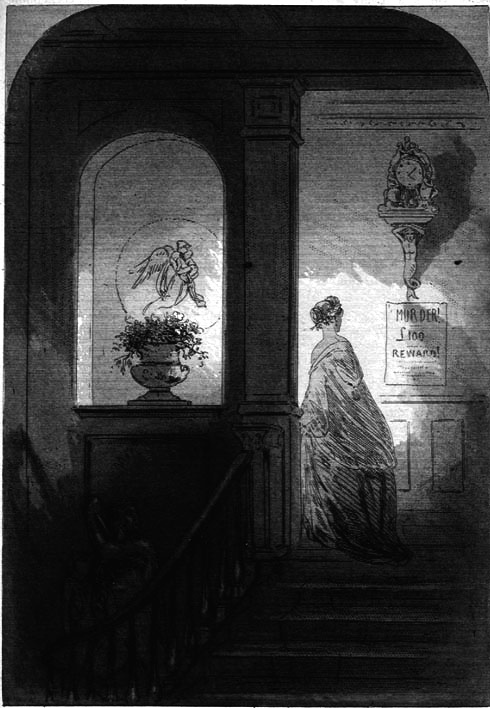
This is merely in passing. She scarcely makes a stop, and sweeps upstairs alone. Mr. Bucket, moving towards the staircase-foot, watches her as she goes up the steps the old man came down to his grave, past murderous groups of statuary repeated with their shadowy weapons on the wall, past the printed bill, which she looks at going by, out of view.


This is my favorite print from Bleak House. It's not the most memorable scene -- but it's the one I love best. Cheers to Lady Dedlock, who never missed a meeting, and kept all her affairs in the best of order until they finally collapsed.

Sunday, February 5, 2012

loose definition of terms

David Graeber has this great page-and-a-half screed, in Direct Action, about the difference between hippies and punks. Really, he's interested in talking about Situationism, post-68 divergence, and the loss of the traditional terms like "alienation" and "ennui" in lieu of new terms like "aporia" and "detournment" -- but in the process, he gives a quick breakdown of terms:

No one would ever use these terms to describe themselves. I've never heard anyone say "I am a punk" or "I am a hippie." They are terms you use to describe someone else. In East Coast circles, to call someone a hippie is always to make fun of them, at least slightly...("when you're proposing we organize a drum circle, are we talking *good* drumming, or just bad hippie drumming?" The term "punk," in contrast is almost never pejorative. It tends to be used in a more simply descriptive fashion: i.e., "I'm talking about Laura. You know, that kind of punky girl with the green hair?"


Most people, he notes, are an idiosyncratic combination of both. Still, the terms are mostly used to differentiate. "Hippie" in fact regularly becomes a synonym for "pacifist," and "punk" for "youneger, militant anarchist." At Occupy, you see that pretty clearly in the breakdown of different working groups -- between say, facilitation (interested in the rigorously structured principals of a just conversation) and direct action (fuck the police, let's go party).

I was listening to this song, the bit about "the hippies and the punks and the skinheads and the skaters," and I realized, "Fuuuuuuuuck! The hippies? They're all my friends." They're probably your friends too -- you know, the ones eking out a highly privileged existence running food justice trainings in boxcars, editing magazines, running school garden programs, and otherwise safely embedded in the world of real professionals. They're probably YOU, and everyone you know. Hardworking. Ethical. Hard to get to know.

The punks, on the other hand -- they remain beautiful and obscure -- a lot like David Graeber. John Darnielle is a punk -- a friendly, nerdy dude with a preference for boxing and death metal. Parts and Crafts is full of them: the nerds and the freaks, the folks who are ill at ease. "DIY became the basic punk credo. Make your own fashion. Form your own band. Refuse to be a consumer. If possible, become a dumpster diver and don't buy anything. If possible, refuse wage labor. Do not submit to the logic of exchange. Reuse and redeploy fragments of the spectacle and commodity system to fashion artistic weapons to subvert it."

Sound familiar? Sound silly? Sound romantic? That's you and everyone you know.

Friday, February 3, 2012

old haunts

I spent all day yesterday biking up Myrtle Ave, all the way to the overpass of the JMZ line at myrtle and willoughby. Last time I was at this intersection I was pissed off and breaking up with [this asshole]. Not being one to lay a grievance behind, I stand for a minute and take it in.


It's really dark, for one thing. There's five or six roads that come together, so crossing the street is incredibly treacherous. And under the subway tracks, there's this proliferation of commerce -- it's like being at Yankee Stadium, with fourteen different bodegas and people standing out at every corner hawking incense and necklaces. Really fucking beautiful.

I turn up and around the side streets, looking for Surreal Estate. Not finding it, I look for Troutman (out of a bizarre desire to rehash old wounds). Luckly, I don't find that either.

I met this woman today who really hates Occupy Wall Street. She's the resident artist at Proteus Gowanus, and was convinced that everyone living at the camp was an ivy league student. "Of course they can take off work! They have all this money!" I don't think that's true, but I didn't really want to argue with her about it.

I do wonder how she managed to get to Zucotti Park and only speak to academics -- if it's anything like Boston, it would have been hard to take one pass through the park without stumbling over two drunken fistfights and one completely sober and intentional threat to physical violence.

Sometimes I wish I was not so bitter about the site. I turn left up Bushwick Ave and make a mental note of buildings that are boarded up, empty lots, open gates. I wonder why they opted for tents. Why Zucotti? Why that space, over any other? Did they expect it would last -- or did they expect to pitch tents for three days, and then find themselves with a long-term occupation? Passing by St. Mark's church, I make a note of the intersection and wonder idly whether I'll pass the big condo conversion anytime soon (I read about it: I know it's here somewhere).

People are so quick to shake off misalignments, small hypocrisies, to try to separate themselves for the sake of calling shit out and holding people accountable. I remember when Darrin drove up to the site in a BMW -- or when AFL-CIO called me up and said, "yes, we're making hats especially for occupy" My thought was, "what the fuck, you don't get this at all." But Darrin spent a couple of years organizing prisoners before he got snapped up by SEIU and is grateful to make it to thirty -- so what if if he has a nice car now? It's so hard to know people, to know where they come from.

Sometimes you go on a couple of bad dates -- sometimes the union calls up and wants to make you hats. Sometimes you find a building and fall in love with it, and sometimes you find yourself in the middle of an occupation, and just have to go with the flow.

hippies || punks || skinheads || skaters

I was in a conference call this afternoon to talk about Oakland. Inevitably, the question of violence was at the heard of the conversation -- what is violence, what do we think about it, and how does what happened in Oakland affect the wider movement?

For context, Occupy Oakland tried to do a big move-in this past weekend, taking a vacant building and throwing a festival to initiate stage 2 of the occupation. It didn't go well. Lots of arrests, lots of protesters beaten up, a non-negligible number of felony charges stemming from police violence. Some protesters broke into City Hall and vandalized some stuff. Stupid shit, and a pretty awful display of militarized police force. The press, on the other hand, has been writing about nothing other than the "violent turn" the protests have taken.

The call was pretty heavily mediated, and seemed like more of an opportunity to just give people space to talk about this, rather than to develop movement-wide strategy for how to respond to Oakland. Midway through the call, Starhawk, a longtime activist who has been involved in just about every major mobilization over the last thirty years, got on the line to talk about her experiences at Seattle, and about broken windows.

What she said is, I think, pretty true -- which is that it doesn't matter what you think about violence -- or how you define it -- or even whether you choose to define it at all. When people break windows or throw things at police, it immediately distracts from *anything else that could possibly be happening at that moment.* It becomes about the spectacle, rather than the act - and because it is in may ways quite a romantic spectacle - the brick through the window, cobblestones pried up - it sucks the air out of the room for any other tactics that might register on the collective radar.

I bring it up because, in the differential spectrum between "hippie" and "punk," the vision of the militant young anarchist throwing a brick through a window is about as romantic as you get.

It's mostly a fiction, of course -- most of the anarchists I know at occupy work in the library, and are peacefully fucking shit up doing childcare for militant housing organizations or putting together theatrical programs for teens. Violence or nonviolence also takes a whole different resonance when put up next to non-Occupy cases of police brutality -- like Ramarley Graham, the Bronx teenager who was shot to death in his bathroom after being chased into his house by a phalanx of New York's finest.

And yet, the stereotypes hold -- when we talk about violence, we're still, to date, mostly talking about Seattle, bricks, black-clad anarchists, black blocs, punks, and their differentiation from hippies. I wish I knew how to push this conversation in a more productive direction -- to take into account a definition of violence, to talk about people vs. property, to get beyond the paradigm of marches, and to talk - really talk! -- about the systemic violence of capitalism, which is supposedly why we're all here.

It's a nonstarter. Masks and bricks. Punks and hippies. That's where the conversation is invariably going to stall out, and it's where we'll be for awhile yet.

Friday, January 27, 2012

I discovered Dean Baker, and it rocked my world

I've been trying to get a handle on the foreclosure crisis and the argument for principal reduction (I know housing activists love it -- but don't have a solid sense of why). Attorney generals across the country are stepping up to demand principal reduction as a just solution for homeowners, and a way to hold banks accountable for crimes committed during the mortgage crisis.

Embedded in the wider question of how banks steered housing prices upward -- driving prices upward, gaming the system, dropping all pretense of market regulation -- is the question of how they were enabled (and continue to be enabled) by government policies designed to funnel money upward into the hands of the wealthy few.

This article from Talking Points Memo, especially, which captures how the high and the low-level points connect to each other -- the low being something like "Wait, waht? Interest modification? Principal reduction? Say I have a house - what do I want to ask for?" the high being, "What are the systemic pretexts for income inequality, and how are they replicated in foreclosure?"

Here, he's explaining the Home Affordability Modification Program -- a program which aims to modifying interest rates slowly and incrementally over time, but largely leaves principal untouched -- is actually just a deeply cynical ploy to drag out the process as long as possible, to keep accruing checks.

Those who believe that is the role of government to redistribute income upward and help the banks want the government to get people to keep paying on underwater mortgages as long as possible. While this may make little sense for these homeowners, since they will never accumulate equity and are likely paying more in ownership costs than they would pay to rent a similar house, it does help the banks' bottom line. Each additional month that underwater homeowners stay in their homes paying the mortgage the banks are getting money they would not otherwise receive.

This explains the value of a program like the Home Affordability Modification Program (HAMP). Only a small fraction of the people who enter this program will end up with a permanent modification that will actually allow them to accumulate equity. However, the entire time that they work with the program, they keep sending a mortgage check to the bank -- and the government kicks in some taxpayer dollars as well. This is a real win-win from the standpoint of the banks as they get more checks from the homeowner than would otherwise be the case, plus the subsidy from the government for stringing homeowners along.


HAMP has come under a lot of criticism, in part because of the fee-for-service nature of the loan adjustments (loan servicers are paid for each modification, not for the whole package) and poor oversight which opens the door to scam artist and predatory lenders (predatory loan modifiers?) Here's what the National Taxpayer Union has to say about it:

HAMP has proven a colossal failure that has done more to harm than help debt-laden homeowners. Having only achieved slightly more than 500,000 permanent modifications, 40% of which the Treasury expects to default, HAMP has fallen dramatically short of its goal of helping 3 to 4 million homeowners avoid foreclosure. To date, far more borrowers have dropped out of the program than successfully achieved permanent loan modification. These borrowers, along with those who later default, will often be left with larger outstanding debt, worse credit scores, and less home equity. Congress should pass legislation that eliminates the HAMP program, to put an end to these counterproductive outcomes while saving taxpayers billions of dollars.[17]


The time piece is interesting, because it's not unlike what homeowners do when they've had enough and decide they're going to defend their homes -- they try to draw the process out, to buy themselves time. In this case, from the banks' perspective, they can wait as long as they want -- time turns into money, and in a world where there is no value left in the market, the easiest and best thing they can do, by this estimate, is to wait it out and keep collecting checks.

There's more to the article -- little bits and pieces, leading to a fuller picture. Bit by bit, article by article, we will defend these homes, and figure out how the process actually works...

Sunday, January 1, 2012

occupation (preoccupied)

Huh! This blog still exists!

In two years, I've left graduate school, gotten married, joined a coop, started a kid's hackerspace, joined an occupation, temporarily housed two dogs, and made some solid plans about how I think my life should go. Two hundred percent of what I've been thinking about for the last three months has had to do with Occupy Boston, and it's relationship to everything else in my life. It's hard to make space, or have patience for conversations which aren't urgently involved in this project. No more lying in bed and bitching about the deficit. Shit is real, and it's tim to get organized.

At some point, though, it became clear that fewer meetings (and fewer emails) are in order. Got to tame that shit down, otherwise you'll never get anything done. Got to get less angry about the world, so you can actually start changing it.

There's more to say, but it's the first day of a new year, and I'll leave it at that for now.

Wednesday, April 21, 2010

dreams, revenge

Three lines of discussion in my sleep last night.

First dream, Buffy. It's been a long time since I've drop-kicked anyone in my dreams. Today, I'm three episodes from the end of Angel: Fred's sitting on the couch across from me, alive! and suddenly, inexplicably, dead, and I'm sitting there conversing with an alien head (not too pretty). Three subsequent shots: up close on the face, down the shaft of the neck, up to the (pretty gross, awfully bloody) stump of a neck. It was a pretty creepy dream.

Second dream, love and internships. I'm up late at my fantasy job (filing paperwork for Prometheus), talking to my not-so-fantastical boyfriend (J), who is trying once again to convince me that we should make out. It's late, I've got a long subway ride home. I go outside to get a breath of fresh air, and he's grilling pizza for me on the patio. I shrug, and eat a slice. We do not make out.

Third, the most surreal. I've made my way to the end of the New York waterway and discovered an empty pier: a remnant of the British navy, but no boats in the bay. I turn to go home, and realize that if I lift my arms, I can simulate Bernoulli's principle. I lift; I rise. In the back of my mind, I know all this has been preordained by the Obama administration. I'm four hundred feet up and rising fast. Unthinking, I retract my arms, curious as to how fast I'll fall.

why *are* pretty girls so stuck up?

As part of our mandatory training on how to teach freshmen to write like Harper's critics, I attended a session today on writing in other disciplines. Three presenters, three papers, three disciplines: history, political science, and "real science." It's the second one that really got to me.

The speaker began by going through main schools of political theory -- Comp. Politics, American Politics, IR, Political Theory (bracketed as "really practicing philosophy" and "largely irrelevant to the rest of the field") Political science, we learned, begins by taking puzzles and trying to come up with answers to them. The puzzle, as presented, was "Why are pretty girls so stuck-up?"

"I realize that the gendered aspects might constitute something like bias," he goes on, "but it's my presentation." Why are pretty girls so stuck up? Before we get to the question, the literature review, the lens. They might be stuck up for psychological reasons: pretty women were, presumably, pretty babies, and by college they've accumulated decades worth of positive reinforcement, leading to an overinflated and presumably irreversible sense of self-importance. Alternatively, we might turn to critical theory: pretty girls are stuck-up because the terms "pretty" and "stuck-up" are cultural constructs. This option is quickly abandoned, as it would negate the premise of the question. Let's try economics: pretty girls are stuck up because, like anything else, desire operates within a market, and pretty girls have a surplus value. He underlines this twice. "I think there's something to this one," he says.

At this point, the room is beginning to smell blood. Eliding the gendered aspect elides the fact that introductory writing classes are by and large taught by women. More to the point, they're taught by English majors, to whom "discourse" and "critical theory" (and let's go out on a limb here and say "gender") are still pretty active terms. One person raises her hand. "What's the category if a pretty girl is stuck up because she's tired of people calling her out on the street?"

Gender trouble aside, there's little difference between the overarching structure and the framework for a humanities paper -- you begin with a thesis, move through the lit review. Where we got caught up, by contrast, is where our students get stuck -- in a definition of terms. The assumption that you could choose freely between your terms -- skipping critical theory, underlining economics -- glossing over the idea that some levels (gender parity, for instance) for instance, precede and create other levels (say, assuming priority of the market).

We moved on. The point, after all, is not to worry over the frame, but to answer the question. Anyway, skipping over gender mostly just reified the prevailing assumptions in the room -- that is, the *real* differences between the humanities and the social sciences (in a handbag: that quantitative information is both more transparent and more concrete, that culture is by definition relativistic, that you have to read for *something* in order to say anything meaningful about the world, and that we don't hypothesize in science; we stick to observable facts).

All this is absurd, of course, but it gets to why the term "critical theory" would have so little valence in a discussion of how to teach political science. The real point is why "economics" got underlined three times. It's evident in the overtly sexist tone of discussion -- this jump to economics, and the assumption that economics is the only plausible lens for understanding political science, as it's actually practiced in the real world. Of course women are participating in a market. The idea that they aren't is absurd -- because, in the absence of quantifiable information (about how frequently they call you back, how many looks they acquire, how frequently you, in turn, fantasize about tearing off their clothes), there's really nothing to debate. End of discussion.

This gets to what David Graeber talks about in his book on values -- the sense in which economics (and its specter, Saussurean linguistics) are both empty categories, things that you read for, rather than read through). The point being that economics, as a frame, tends to be a means to an end -- the end (a validation of the market) serving first and foremost as a demonstration that the means (the assumption of a market to begin with) is a valid frame of argument. Having just read this and found it to be pretty succinct, I was more than ready to bristle at how quickly "economics" became the key term of the debate.

I digress. What's interesting, mostly,is not just the type of argument (quantitative or not) or the subject of the debate (reading texts, reading graphs, developing algorithms, counting people), but the grounds for the argument that really distinguishes these debates. History papers tend to be more conservative than literature papers in that they take more modest grounds -- they are interested in covering lost territory, not reinventing terms.

Which begs the question -- what do literary papers do? If I were giving this talk, I'd probably talk vaguely about culture, what we do with it, how we're wary of the term, and how it's gotten picked up and dropped over the last thirty or so years. I'd probably talk about it badly. I don't have really solid terms, and am unsure of the territory of the debate.

But maybe, on the other hand, that's what we *do* do -- not map out territory, but set the terms. If history fills in gaps, literary scholarship deals with context and hypotheticals -- the circulation of reform texts, the representation (rather than the treatment) of women, races, political minorities, the way things are said, rather than the content. All these speak to implicit cultural codes, which are only visible when the stakes are quite low.

What literature might offer, in other words, is an insistence on prioritizing *why* a thing would be worth looking at, rather than whether it actually is. It does so, mostly, by choosing topics that have no immediate relevance in the world -- the parsing of codes in mid-century romance novels, the context of book circulation, the political views of authors who are long dead - as rich ground for theorizing ways of reading, categorizing terms, and recontextualizing the assumptions being made.

All this suggests that culture isn't quite as dead as people like to say it is -- and that far from being an empty category, Marxist determinism (through Foucault and Butler, our most articulate readers of power) may actually be *more* basic to what we do than anything else -- an empty category, taken for granted because we're already so ready to read for it. That, as a takeaway point, is both obvious and incredibly reassuring.

Wednesday, December 16, 2009

Cages aren't the problem

The UK Telegraph posts about protestors at the Copenhagen climate talks, along with a front-page photo essay by the New York Times. Meanwhile, the Huffington Post breathlessly tries to interview "the violent segment" (unidentified, other than to say that they're anarchists, they're dressed in black, and they're throwing rocks).


You'll notice, in both videos, that the protesters are covering their faces.

There's good reason for this -- among the many last-minute provisions passed in Copenhagen was one that made ski masks illegal (as well as any other headgear that would cover your face and prevent identification). Leaving aside the staginess of both protestors and police preparations (two weeks ago, an article titled "Copenhagen Talks Tough" bragged about the three dozen steel cages assembled to house the rabble), shit like this is something to worry about. It's not tear gas and riot gear that are the problem --- it's the expansion of surveillance, with its incipient denial of the most basic form of self-defense, the ability to protect your own identity.


The Copenhagen talks have been deliberately staged in the language of street warfare -- police checkpoints, gated buildings, cages and detention centers -- which largely a demonstration (lighting a car on fire and dousing it, to show off) At the same time, it has prompted an alarming expansion of police power: a law authorizing preemptive arrest, the arrest of Tadzio Mueller, and the banning of face masks, with the implication that protesters (peaceful or non) should expect their participation to be documented.


Legitimate protest is often, by definition, unsanctioned --- that's part of the point, and legislation passed to prevent the most basic form of civil self-defense (the obvious utility of carrying shields when police show up in riot gear, to the very basic right to protect your identity) is a pretty basic violation of civil rights. Activist groups have decried the Copenhagen protests as a human rights issue (arbitrary arrest, home invasions, cages in prison detention centers) -- but banning ski masks by non-violent protestors is a much more more malevolent turn toward police state -- not least, because it was so quickly legitimized by a parliamentary vote. The fact that it's pageantry is kind of beside the point. It's worth worrying about.

Wednesday, September 30, 2009

Shoegazing

When we ask students to do revisions, we point them toward specific sections -- don't try to revise the whole thing in one go. pick a section. choose ONE thing to fix. the idea is that if you do this, you actually get substantive revisions --- whereas if you ask them to take the whole essay in one go, they get overwhelmed --- too much to process, and so you get conservative revisions (sentence level changes) against a backdrop that remains essentially the same. Revision is about time management -- you assume that the student is going to spend an hour, maybe two, focusing on this, and then redirecting attention elsewhere. The two major constraints are length and time -- each paper is usually 5-10 pages, they're writing 2-3 at any given time. There's only so much time you can spend focusing on one thing in order to get them all done -- so you do them all superficially.

How much time does it take to read and respond? I'm surprised at how much longer it takes me to read a novel when I don't have a deadline attached. Structuring your day around the work you're doing --- giving yourself a schedule. My new task for myself is to write a 5 page paper in response to everything interesting I read. Photographs in Austerlitz. The Weatherman bombing, and how the Thinker lost his legs. Not just measuring reading attention (this is pretty much cued to the length of time it takes to skim Metafilter's front page), but measuring the amount of time it's comfortable to spend thinking and working through a coherent thought. It's not that long! I keep forgetting to tell my students this. It's always just a little shorter than I would like.

When you are sad, everything becomes a vacuum, cold dead air pushing toward yourself. You register motion but can't focus on anything. Sounds register, but they are barely audible -- you hear conversation in the next room, and, in spite of being filled with a prescient desire to speak, you lie in bed, wondering where the voices are sitting, relative to the speaker, wondering what the room looks like. The room is filled with dead air --- there's so much space between you and them. It's important to keep the space clear to avoid contamination.

Yesterday: A thing I couldn't do. Sum up world systems analysis in two sentences or less. This was really frustrating.

Saturday, July 18, 2009

I'm halfway through Richard Hofstadter's "Anti-Intellectualism in American Life." I have a lot of thoughts on this -- in lieu of editing, I'll lay them out.

1) One of the major claims of the book is to relate "intellectualism" with "university" and "schooling" -- and to oppose this to unschooled, salt-of-the-earth common sense. He goes through a number of iterations of this (Methodist universities, Unitarianism, Jefferson, Tocqueville and the Sorbonne, next to Davy Crockett, Andrew Jackson, circuit ministers, etc). The differences is always, invariably, class-based --- "high church" vs. "low church," "gentlemen" vs. "professionals," "aristocrats" vs. "politicians" -- with the former having the benefit of a robust system of higher education.

2) For Hofstadter, this doesn't start with Jacksonian democracy, but with Evangelicalism and the low church movement, circa 1700 (?). McCarthy aside, he seems to be looking forward to figures like Jerry Falwell as modern variants of this split. What's interesting, though, is that this breaks down over access to education --- the argument of the Reconstruction Democrats isn't (or isn't only) that academic qualification is insufficient for practical political work, but that over half the population lacks access to it. Which is a problem! Hofstadter credits this -- he also credits a fundamental meanspiritedness, whereby, in lieu of advocating for real educational reform, the highly educated are held up for ridicule and namecalling, and effectively exiled to the far corners of political life.

I have thoughts on this -- on whether "utility" and "ineffectiveness" is a valid critique (a tangential issue), and, more centrally, on where the role of schooling and education falls in here. The other major -- and really cool -- part of the book, of course, is the roots between evangelicalism and Anglo-American intellectual life, which is something I'd really like to look into. That's all I've got to say for the minute, though.

It's quarter of eleven on a Saturday morning.

Library time!

Friday, July 17, 2009

I've been thinking a lot about "what kind" of writing I want to be doing --- whether I want to get back into thinking about journalism, of various stripes, or whether I want to start writing my dissertation. This sounds like a really pat, facetious thing -- of COURSE you don't want to start writing your dissertation! -- but it's actually a hard thing to think about. For instance: whether I actually want to get better at doing interviews? What other kinds of things qualify as "research" -- and whether I want to include them in what ultimately constitutes my "writing"? (oral history, yeah or nay!)

With that, I've been thinking about what to do with this blog -- whether I want it to be a place for publishing (my thoughts, short essays in development, writing of friends?) or whether I want it to be what it essentially is now -- a place for bookmarking random thoughts on what I'm reading. The trash bin operation -- the idea that you read and think X thoughts (which you write down) and subsequently prune into Y manageable thoughts (which you dog-ear for future reference, and hope you don't forget about). It's been marginally useful as the latter -- it'd probably be a lot more useful, on my end, if I tried to work these up into cohesive thoughts.

The idea, more broadly, for me, is how I want to think about writing as a process, in line with running workshops to generate branch income for Parts and Crafts (an awesome kid's education project a friend of mine is running). It seems like Working Text is a good corollary project -- a place for me to think about teaching, and to try out some ideas for group projects, seminar work -- all an excuse to get together and talk about work around the dinner table! Because I think I can stand to get better at my own writing -- but also because it's hard to do alone? Thinking about how to make this blog serve that project, I guess, is something I want to work on.

Any ideas? Help me construct my next life project! This, of course, is called crowd-sourcing therapy. Best answers will be posted on next week's show!